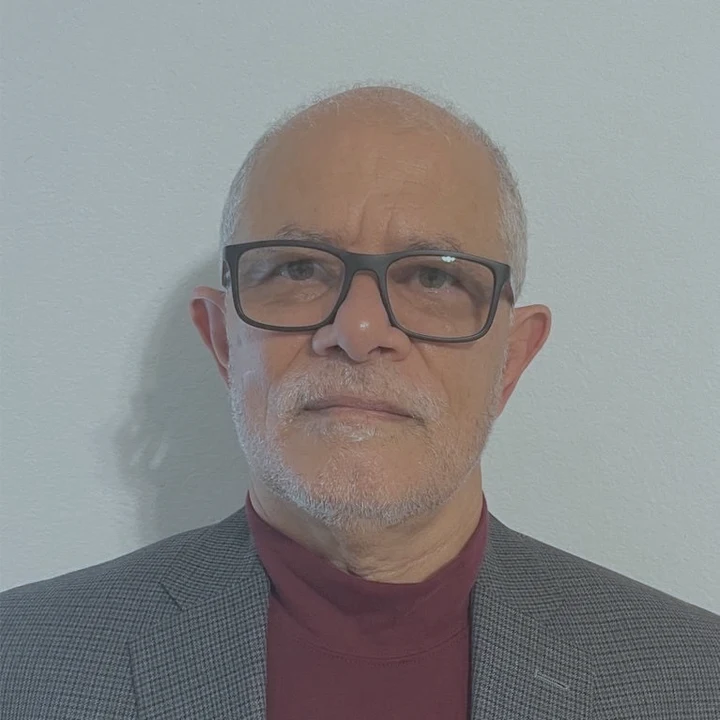
Javier Livio
PhDFounder · President & CTO
A hands-on scholar-technologist whose career spans multiple industries and technologies. Specializes in standardized patterns for deploying reliable, scalable and secure distributed software solutions.

RE-CITE · AI speech assessment
An adaptive speech assessment that turns a child’s own words into precise, measurable insight — built for the clinicians who guide them.
A misdiagnosis does not correct itself. The child goes on without the support they needed, and that time does not come back.
Most assessments happen once, in an unfamiliar room, with an adult the child has only just met. That is not where a child speaks the way they really speak.
What is RE-CITE
RE-CITE is an interactive, adaptive speech assessment program built on Hacedor’s Advanced Word Elicitation Methodology. It brings the science of speech-language pathology together with today’s most advanced artificial intelligence, turning a child’s speech into clear, measurable insight.
How RE-CITE works
Step 01
Meet with a Speech-Language Pathologist, a trained clinician, to get started.
Step 02
The child plays an interactive speech game while the clinician listens.
Step 03
The recordings collected during the game are evaluated by artificial intelligence, through a scientific process known as Direct Magnitude Estimation.
Step 04
Receive a detailed speech-language intelligibility assessment report — a score card with intelligibility scores and percentiles.
How RE-CITE works
Our approach transforms variability into measurable accuracy.
Leading the way in innovation, delivering precise and efficient solutions that enhance daily living, such as human speech articulation. With RE-CITE, setting new standards for excellence in speech intelligibility assessment.
Who we are
We are Hacedores, Spanish for “makers”: a team passionate about advancing speech-language pathology by assessing articulation and phonology, and committed to thought leadership in innovation that improves daily life.
“We uncover our nature through action.” — Steven Pressfield
Founder · President & CTO
A hands-on scholar-technologist whose career spans multiple industries and technologies. Specializes in standardized patterns for deploying reliable, scalable and secure distributed software solutions.
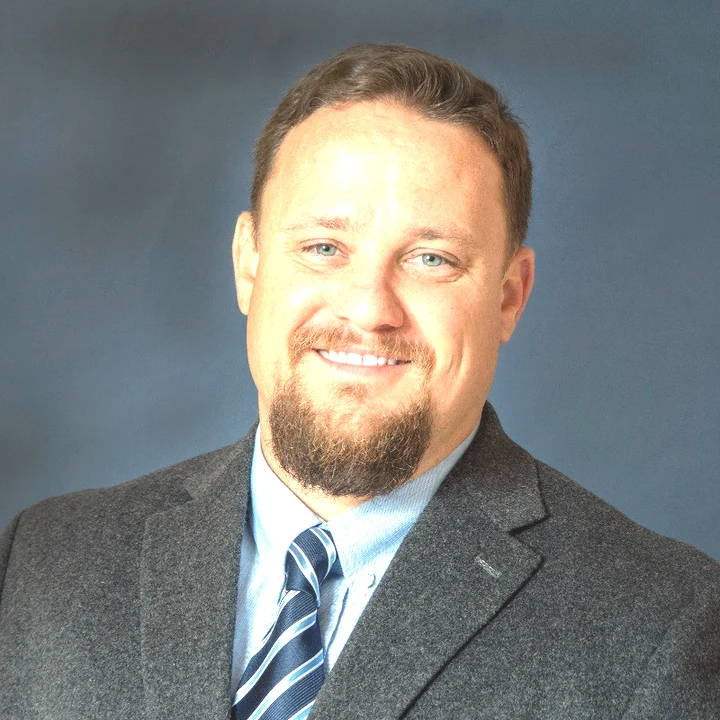
Cofounder · CSO
An award-winning economist and public policy professor at The Ohio State University. Specializes in energy and environmental policy and economics, economic resilience to natural hazards, risk and decision analysis, and applied public policy analysis.
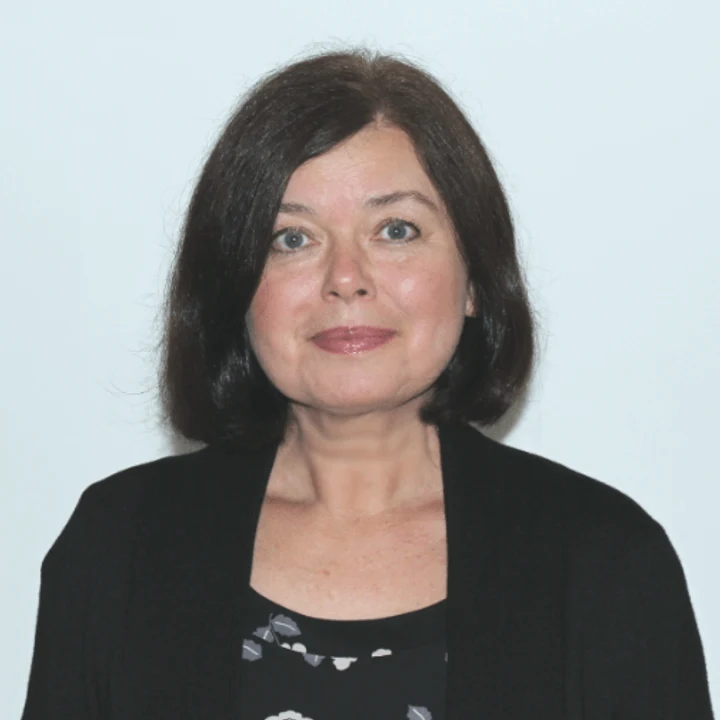
Scientific Advisor
An internationally recognized researcher in speech and language, and research professor at The Ohio State University. Work focuses on variation in pronunciation patterns across all ages, from children to older adults, including dialect variation in American English, second language acquisition, and speech-language disorders.

Cofounder · Speech-Language Pathologist, Clinical Specialist
An ASHA Board Certified Speech-Language Pathologist with two decades of clinical practice across home-based care, early intervention, outpatient clinics, schools and private practice. Owner and founder of Rocket City Speech Therapy, a pediatric private practice in Huntsville, Alabama.
Questions
RE-CITE is an AI-based tool developed specifically for use by trained Speech-Language Pathologists (SLPs) to assess and track children’s speech intelligibility. RE-CITE’s design works to ensure that every child benefits from a reliable, SLP-administered assessment, giving parents, educators, and pediatricians a solid foundation for understanding and supporting each child’s communication journey.
RE-CITE can be used for both diagnostic purposes and progress monitoring.
For diagnostics, RE-CITE provides in-depth speech intelligibility assessments, offering separate statistical quantifications for various dimensions of intelligibility.
Unlike traditional formalized assessments that are typically administered infrequently, RE-CITE is uniquely designed for progress monitoring. It can be used multiple times over the course of treatment to track a child’s progress toward their goals. By quantifying improvements across specific dimensions of intelligibility at each session, appointment, or visit, RE-CITE provides clinicians with actionable data to inform ongoing therapy decisions. While not designed as a therapy resource, its ability to monitor progress over time makes it a valuable tool for measuring treatment outcomes.
Because RE-CITE is an adaptive tool that learns from each child as they engage, completion times are not the same for every child. SLPs should plan for 15 to 20 minutes on average for a completed RE-CITE session.
While the reports generated for each child from a RE-CITE session are standardized, RE-CITE itself is not a traditional standardized assessment. Instead, it is an adaptive tool, with no two sessions being identical. The AI engine learns from and adapts to each child in a unique, data-driven manner to provide personalized insights.
As highlighted in a recent ASHA publication, “Psychometrically sound standardized tests can act as a piece of an assessment battery but should never act as the sole indicator of typical versus disordered development.” This underscores the importance of incorporating tools like RE-CITE, which generate norm-referenced data while adapting to the individual, as part of a comprehensive approach to diagnosing speech sound disorders in children. By blending standardized reporting with adaptive assessment methods, RE-CITE supports a balanced and thorough evaluation process.
Standardized Tests and the Diagnosis of Speech Sound Disorders, Perspectives of the ASHA Special Interest Groups, Volume 4, Number 1, Pages 58–66. doi:10.1044/2018_PERS-SIG1-2018-0018
RE-CITE is designed to assess a range of consonants and vowels at the word level, providing detailed insights into a child’s speech production. While its current focus is on word-level assessments, future applications may include the capability to analyze conversational speech samples.
Research published in the Journal of Speech, Language, and Hearing Research highlights the value of single-word sampling, stating, “On measures of intelligibility, speech accuracy, and phonemic inventory, obtaining a single-word sample proved to be a more informative method of differentiating children with speech sound disorders from typically developing children than connected speech samples.” This evidence underscores the effectiveness of RE-CITE’s word-level approach in supporting accurate and reliable assessments.
Comparing the Informativeness of Single-Word Samples and Connected Speech Samples in Assessing Speech Sound Disorders, Journal of Speech, Language, and Hearing Research, Volume 64, Number 11, Pages 4071–4084. doi:10.1044/2021_JSLHR-20-00172
Contact us
Questions about RE-CITE, or how it could fit your clinic or school? Write to us — we read every message.